TL;DR: The 3 Layers of Anime Room Lighting
Building a cozy anime gaming room isn’t about buying every LED light you see. It’s about specific layers. First, you need a Monitor Light Bar for eye-safe task lighting that won’t glare on your screen. Second, an Anime Neon Wall Sign acts as your accent piece to fill empty wall space. Finally, RGBIC Strip Lights provide the immersive ambient halo effect behind your desk. Combine these three, and you get that perfect 35mm film, lived-in aesthetic.
| Lighting Layer | Best For | Crucial Feature |
|---|---|---|
| 1. Monitor Light Bar | Task lighting & Eye care | Zero screen glare & Asymmetrical optical design |
| 2. Anime Neon Sign | Wall aesthetics & Vibe | Dimmable & Cyberpunk/Anime motif |
| 3. RGBIC Strip Lights | Immersive background halo | Segmented color control & Music sync |
Which Lighting Fixes Your Setup’s Core Problem?
Let’s break down exactly which layer you are missing, and how to fix it without cluttering your desk.
1. The Eye-Saver: Monitor Light Bar for Glare-Free Gaming
Conclusion: If you game or work in the dark, this is non-negotiable for preventing headaches.
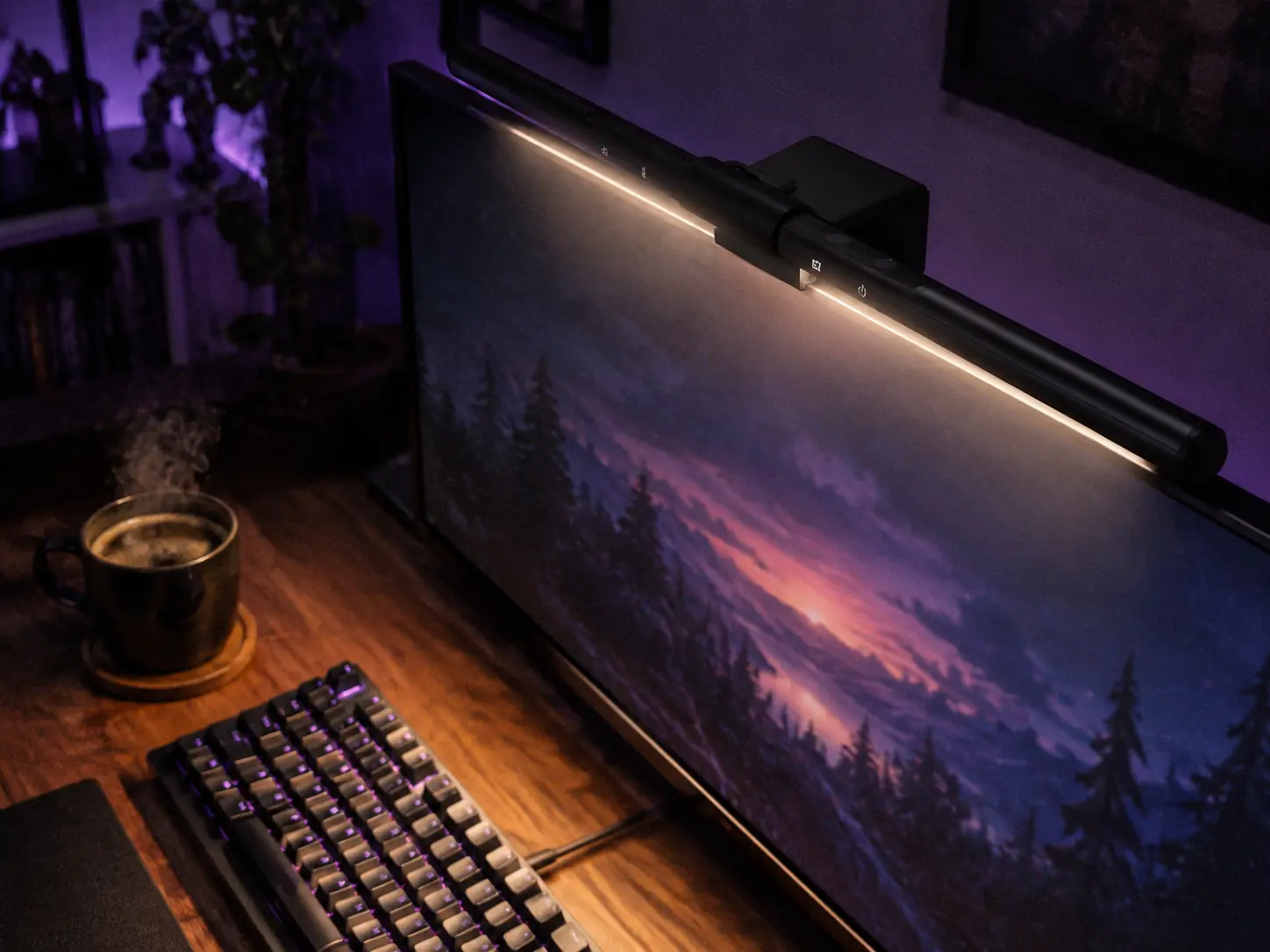
🚫 Skip if: You only use a laptop and sit far back on a couch (though if you use a laptop on a desk, you should really check out our aesthetic laptop stands guide to fix your posture first).
A monitor light bar uses asymmetrical lighting, meaning it only lights up your desk and keyboard, leaving your screen completely dark and glare-free. It saves massive amounts of desk space compared to traditional lamps.
Buyer’s Voice (Summarized from Reddit & Amazon)
Pros: Zero screen glare; frees up desk space; adjustable color temperature (warm to cool).
Cons: Doesn’t fit curved monitors well; webcam placement can be tricky; cable management needs planning.
2. The Aesthetic Anchor: Anime Neon Wall Sign
Conclusion: The fastest way to transform a boring white wall into a cyberpunk anime retreat.
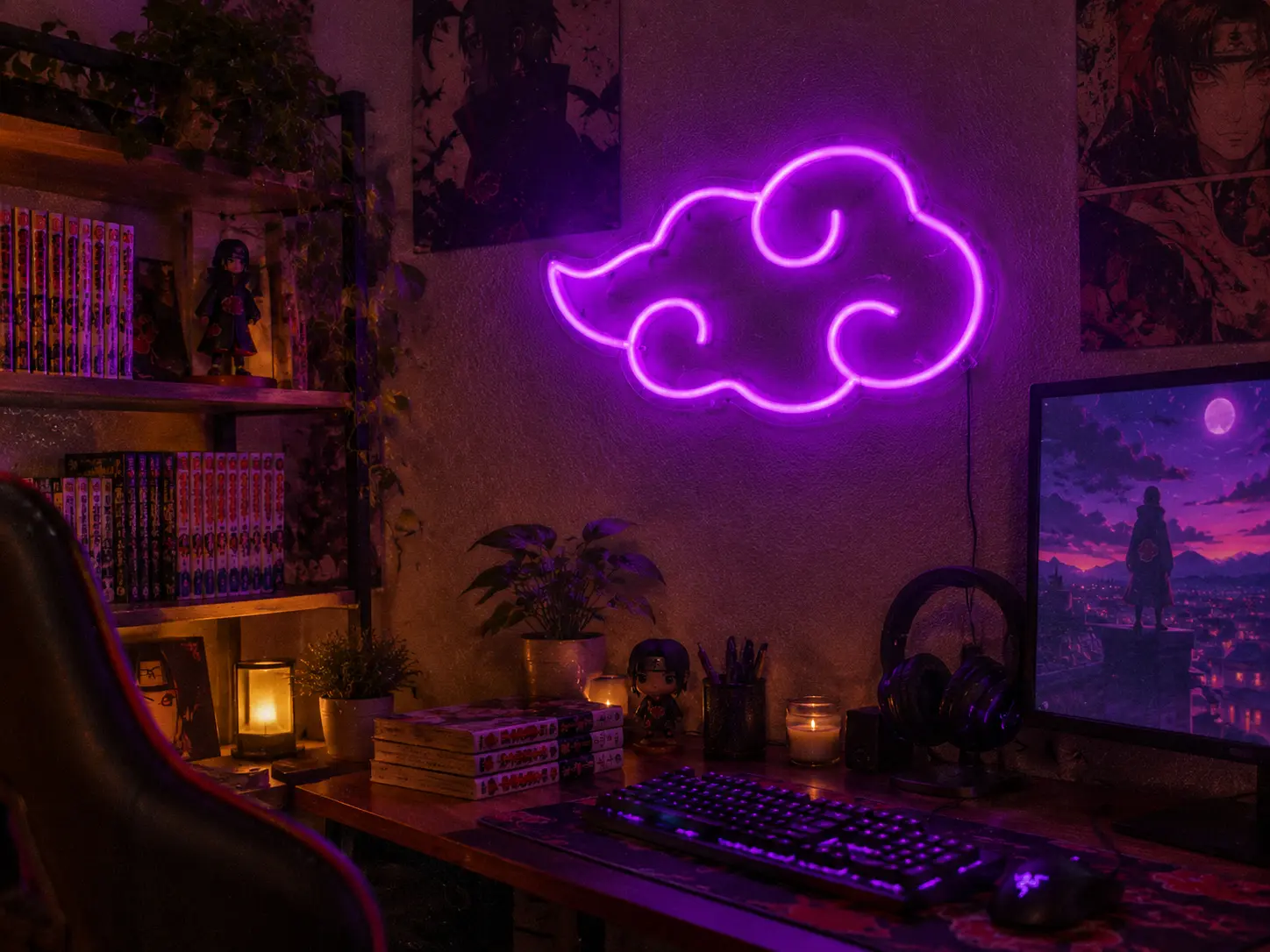
🚫 Skip if: You need primary lighting to read physical books, or if you are renting and absolutely cannot use adhesive hooks (for renters, consider pairing this with clamp-on acoustic panels instead).
Neon signs (especially LED-based ones that don’t get hot) add that essential “lived-in” late-night Tokyo vibe. It acts as an accent light, drawing the eye up and making the room feel taller.
Buyer’s Voice (Summarized from Reddit & Amazon)
Pros: Instantly upgrades the room’s vibe; doesn’t emit heat like traditional neon; dimmable.
Cons: The power cord can be ugly if not hidden; USB-powered versions sometimes lack a wall adapter; some adhesives fail over time.
3. The Immersive Halo: RGBIC LED Strip Lights
Conclusion: Essential for washing your back wall with sunset or cyberpunk colors.
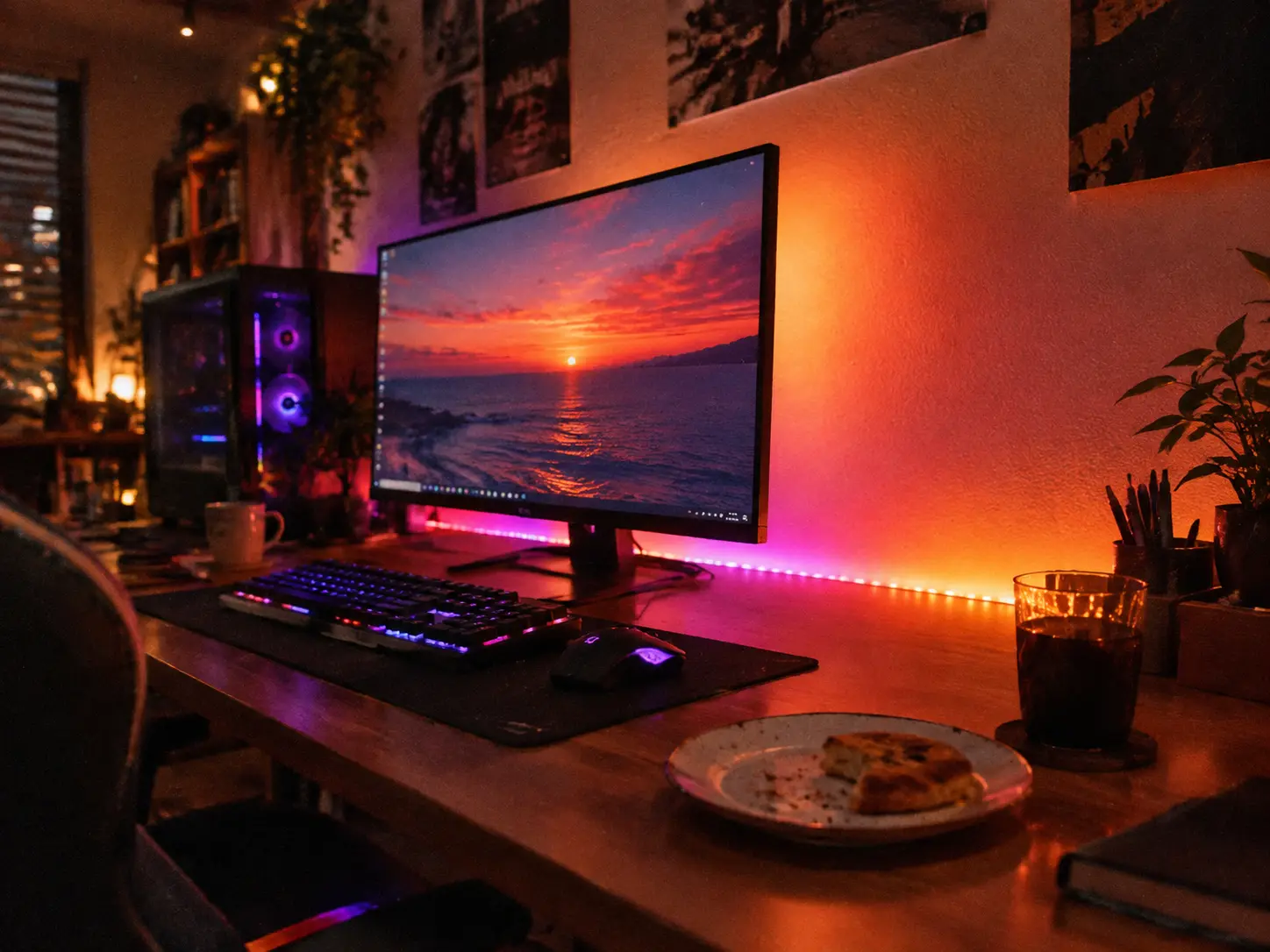
🚫 Skip if: Your desk is in the middle of the room facing the door, leaving no back wall for the light to bounce off of.
RGBIC is crucial here (unlike standard RGB). The “IC” means independent control, allowing multiple colors to flow along the strip simultaneously. Running these along the back edge of your standing desk creates a beautiful halo effect that makes your monitor look like it’s floating.
Buyer’s Voice (Summarized from Reddit & Amazon)
Pros: Stunning multi-color flowing effects; app control is excellent; great for reducing eye strain.
Cons: If bent at a sharp 90-degree angle, the circuits can break; the adhesive can damage cheap paint upon removal; sometimes hard to sync with PC games.
Frequently Asked Questions (FAQ)
Does a monitor light bar scratch the screen?
No, high-quality light bars use a weighted counter-balance clip with silicone padding that rests on the bezel, not the screen itself.
Can I sync RGBIC strip lights with my games?
Yes, premium brands offer desktop apps or camera-based sync boxes that read your screen’s colors and extend them to the wall.
Are LED neon signs safe to leave on?
Modern LED neon signs are very safe. They consume minimal power, do not contain toxic gas, and stay cool to the touch even after 24 hours.
How do I hide the cables for wall neon signs?
The cleanest method is using a cable raceway painted the same color as your wall, or routing the wire behind acoustic panels or posters.